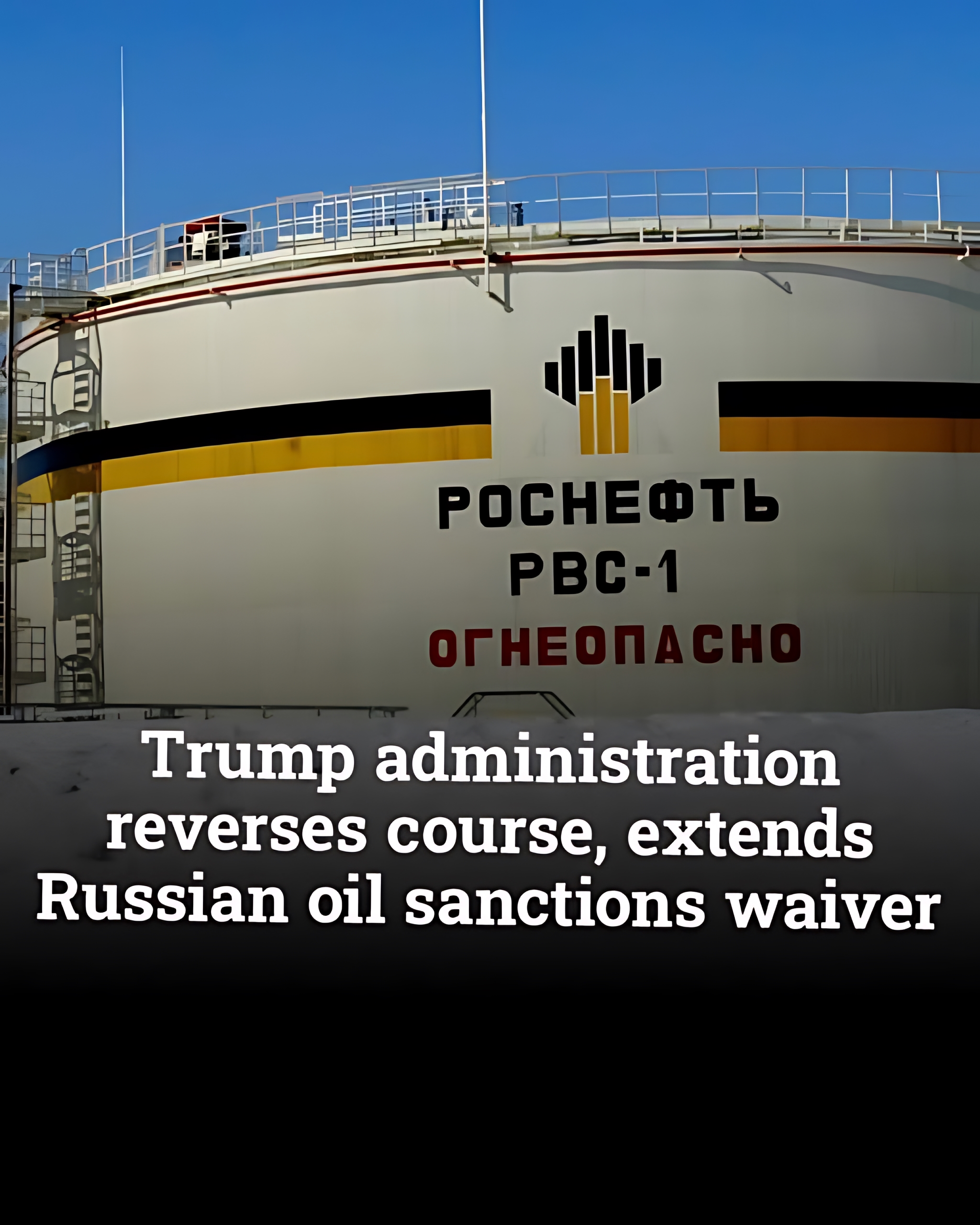
WASHINGTON — The Trump administration on Friday abruptly reversed its earlier position and extended a waiver allowing the import of certain Russian oil and petroleum products, a shift that comes as the U.S. continues its naval blockade of Iran and global energy markets face mounting pressure from the conflict.
The decision marks a sharp departure from comments made just days earlier by a senior Cabinet official, who had insisted the administration would not renew the waiver and would instead tighten restrictions on Russian energy flows.
A White House spokesperson confirmed the extension late Friday, saying the move was necessary to “ensure stability in global supply during an extraordinary period of geopolitical disruption.”
A Reversal Driven by War‑Time Pressures
The Iran war has strained global oil markets, with shipping disruptions in the Strait of Hormuz and elevated insurance costs pushing prices higher. Administration officials said the waiver extension was aimed at preventing further volatility.
“This is a temporary, targeted measure to protect American consumers and global partners,” a senior administration official said. “It does not change our broader sanctions posture toward Russia.”
The official did not specify how long the waiver would remain in effect.
Earlier Comments Contradicted
The reversal comes after the Secretary of Energy said earlier in the week that the U.S. would not extend the waiver, arguing that maintaining pressure on Russia remained a strategic priority.
That statement had been interpreted as a signal that the administration was prepared to absorb higher energy prices in order to keep sanctions intact.
Friday’s decision suggests the White House reassessed the economic and diplomatic risks as the Iran conflict intensified.
Global Markets React
Oil prices dipped slightly following the announcement, with analysts noting that even limited access to Russian petroleum can ease short‑term supply concerns.
Energy traders said the move may help stabilize markets but warned that uncertainty surrounding the Iran war continues to overshadow long‑term forecasts.
Critics and Supporters Respond
Lawmakers from both parties reacted quickly:
- Critics said the reversal sends mixed signals about U.S. sanctions strategy.
- Supporters argued the administration had little choice given the strain on global supply chains.
Foreign‑policy analysts noted that the decision underscores the difficulty of balancing sanctions enforcement with wartime economic realities.
What Comes Next
The administration has not indicated whether additional waivers or adjustments to sanctions policy are under consideration. Officials emphasized that the extension does not alter the U.S. naval blockade of Iranian ports or its broader strategy in the Gulf.
For now, the move highlights how the Iran war continues to reshape global energy policy — and force rapid recalculations inside the White House.