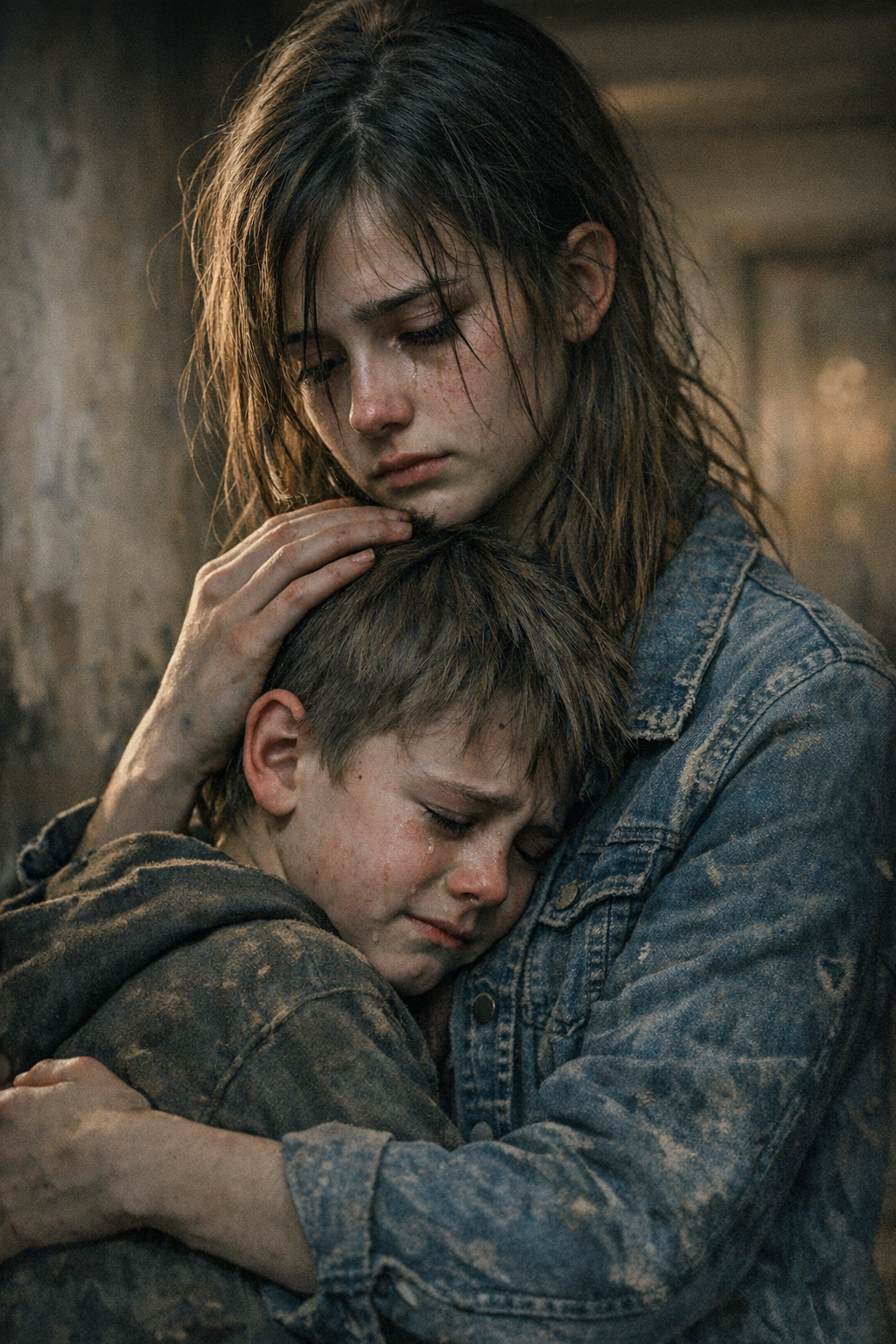
Maya was eight when she first realized her parents didn’t love each other anymore. Not because they said it, but because of the silence — the kind that fills a house like smoke, choking everything warm.
Her brother Eli was only six. He didn’t understand why Mom cried in the kitchen or why Dad slept on the couch. He just kept asking if they were mad at him.
One night, the shouting finally broke through the walls. Maya held Eli in their room, covering his ears while he trembled. She whispered, “It’s not your fault,” even though she wasn’t sure she believed it herself.
A week later, their father packed his bags.
He knelt down, hugged them both, and said, “I’ll see you soon, okay? I just need some time.”
But “soon” stretched into months. Then years.
Their mother tried. She really did. But working two jobs meant she was always tired, always stressed, always one bill away from breaking. She loved her kids fiercely, but love didn’t pay rent or buy school supplies.
Maya grew up fast. She learned to wake Eli for school, braid his hair when Mom overslept, and pretend she wasn’t hungry so he could have the last piece of bread.
Eli learned to stop asking questions. Especially the one that hurt the most:
“Why doesn’t Dad come back?”
When Maya turned sixteen, she found an old photo of their parents smiling on a beach, arms around each other, sun in their eyes. She stared at it for a long time, wondering how two people who once looked so happy could create a future so heavy for their children.
By the time she graduated, she didn’t expect her father to show up. But Eli still hoped. He kept checking the entrance, his face falling a little more each time someone walked in who wasn’t him.
After the ceremony, they walked home together. Eli kicked a pebble down the sidewalk and said quietly, “Do you think he forgot about us?”
Maya swallowed the ache in her throat.
“No,” she said. “I think… he just forgot how to stay.”
They didn’t hate their parents. They didn’t even blame them anymore. They were just tired — tired of carrying the weight of choices they never got to make.
They survived. They grew. But the childhood they lost never returned, and the scars of that broken home followed them into every relationship, every fear, every moment they wondered whether love was something that stayed or something that eventually walked away.