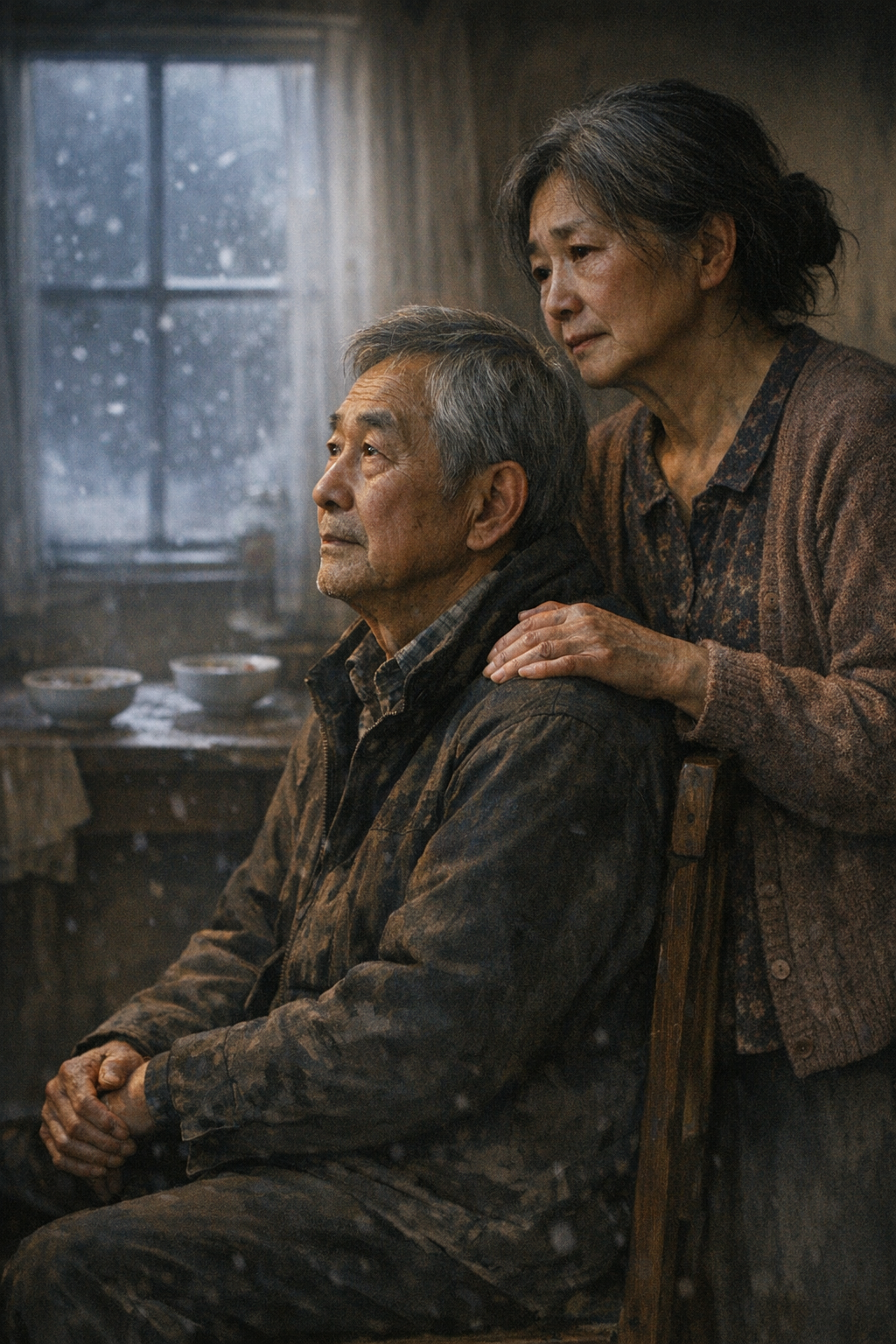
Jun was the pride of his parents. Mr. and Mrs. Han had spent decades working in a small grocery store, saving every coin to send him to college. They dreamed of seeing him build a life better than theirs — a life filled with comfort and respect.
When Jun married, they thought their dream had come true. His wife, Hana, was elegant, educated, and came from a family of means. The Hans welcomed her with open arms, offering warmth and sincerity that came from years of humble living.
But soon, warmth turned to distance.
Hana found their home “too cramped,” their manners “too old-fashioned.” She smiled politely at family dinners but never stayed long. Jun began to echo her words — “We’re busy,” “We’ll visit next month,” “You understand, right?”
The visits stopped altogether.
Mrs. Han still cooked Jun’s favorite dishes every Sunday — spicy tofu stew and sweet rice cakes — just in case he came. She kept the table set for three, even though she knew it would stay that way until bedtime.
One winter evening, snow fell softly outside their window. Mr. Han looked up from his chair and said, “He promised he’d come today.”
Mrs. Han nodded, stirring the soup that was already cold. “Maybe next week,” she whispered.
But Jun didn’t come next week. Or the week after.
Years passed. The grocery store closed. Their health declined. Still, they kept his room untouched — his childhood posters, his old textbooks, his medals from school.
One day, a letter arrived. It wasn’t from Jun. It was from his wife — a formal note expressing condolences. Jun had died suddenly in an accident.
Mrs. Han read the letter in silence. Then she folded it neatly and placed it beside his photo.
She didn’t cry. She had already lost him long before that day.