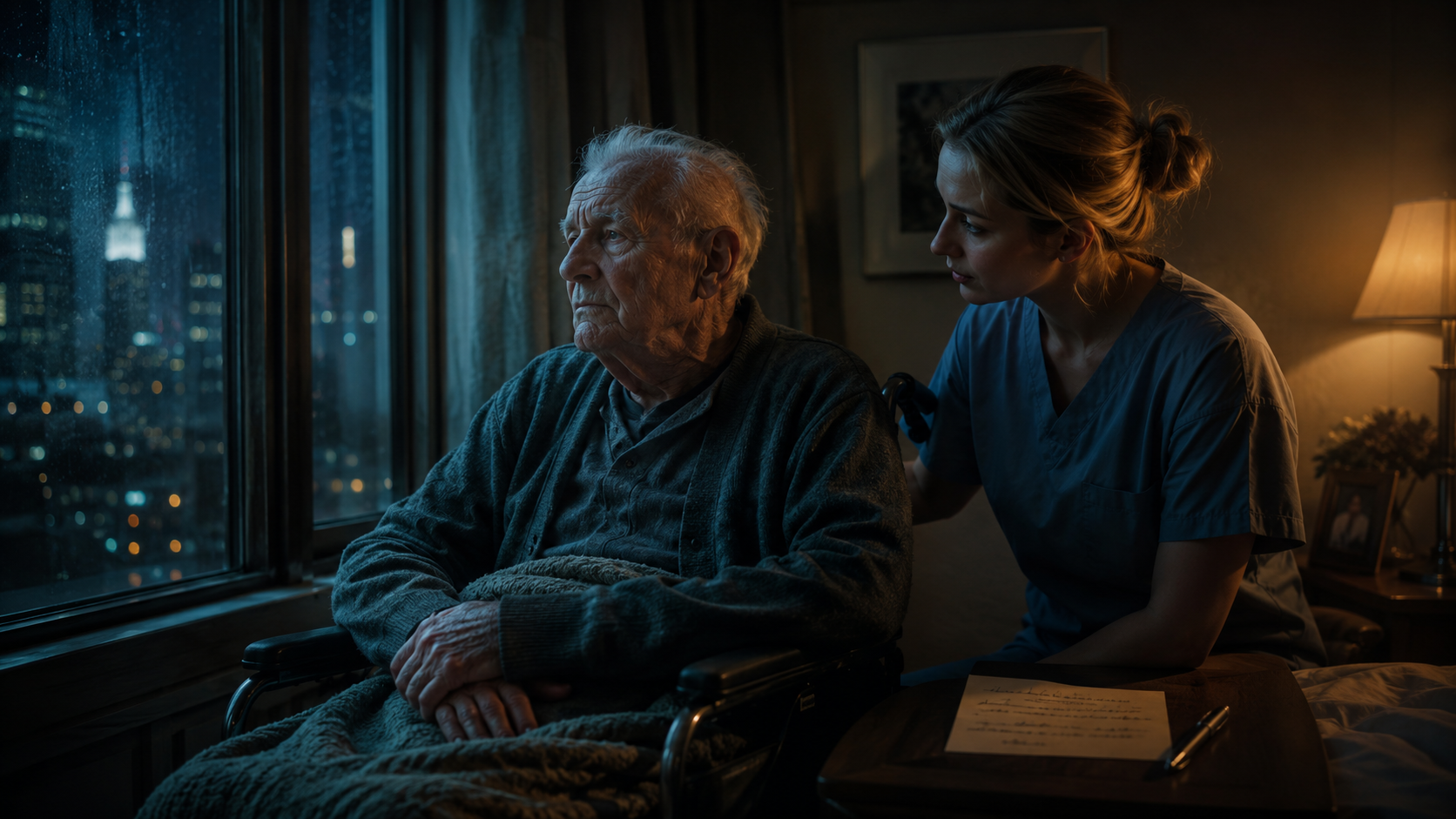
Harold Thompson had the kind of presence that once filled streets, megaphones, and marches. At 84, that presence had shrunk into a wheelchair parked beside a window in a New York nursing home.
Every day, he stared through the glass as if waiting for something—someone—to appear on the other side.
His children never came.
They blamed him for divorcing their mother decades ago. They never knew the truth: she had cheated first, shattering him long before age, illness, or loneliness ever touched him. But Harold never defended himself. He believed that dignity meant carrying your pain quietly.
The staff saw him as “difficult.” The residents saw him as “stubborn.” His children saw him as “the man who broke the family.”
Only one person saw him as human.
Maya.
A young nurse in her late twenties, Maya faced racism from some residents who refused to let her touch them. But Harold—once a civil rights activist who had marched in Selma, been beaten in Birmingham, and jailed in Atlanta—treated her with respect from the moment she walked into his room.
“Good morning, Miss Maya,” he’d say, tipping an imaginary hat.
She became the only person he talked to.
Some nights, after her shift ended, she stayed behind just to sit with him. They talked about everything—his marches, her dreams, the way the world had changed and the ways it hadn’t.
One evening, rain tapping softly against the window, Harold spoke without looking at her.
“They think I left their mother because I stopped loving her,” he said. “But the truth is… she stopped loving me first.”
Maya didn’t interrupt. She let him breathe through the ache.
“I wasn’t perfect,” he whispered. “But I loved them perfectly.”
He paused, then added, “I want to tell them that. Before I go.”
Maya placed her hand gently on his.
“Then let’s tell them.”
She clocked out, but she didn’t go home. Instead, she pulled a chair beside him, opened a blank sheet of paper, and held the pen ready.
Harold dictated slowly, his voice trembling but steady.
“I wasn’t perfect. But I loved you perfectly.”
When he finished, he closed his eyes, exhausted but peaceful.
Two weeks later, Harold Thompson died quietly in his sleep.
The nursing home staff moved on quickly—another empty bed, another room to clean. But Maya didn’t move on. She folded the letter carefully, addressed it to his children, and mailed it herself.
She didn’t know if they would read it. She didn’t know if they would forgive him. She didn’t know if it would heal anything at all.
But she knew this:
Every human being deserves to be understood before they are judged.
And Harold deserved at least that much.
Lesson
Understanding someone’s past doesn’t excuse their mistakes—but it explains their humanity.