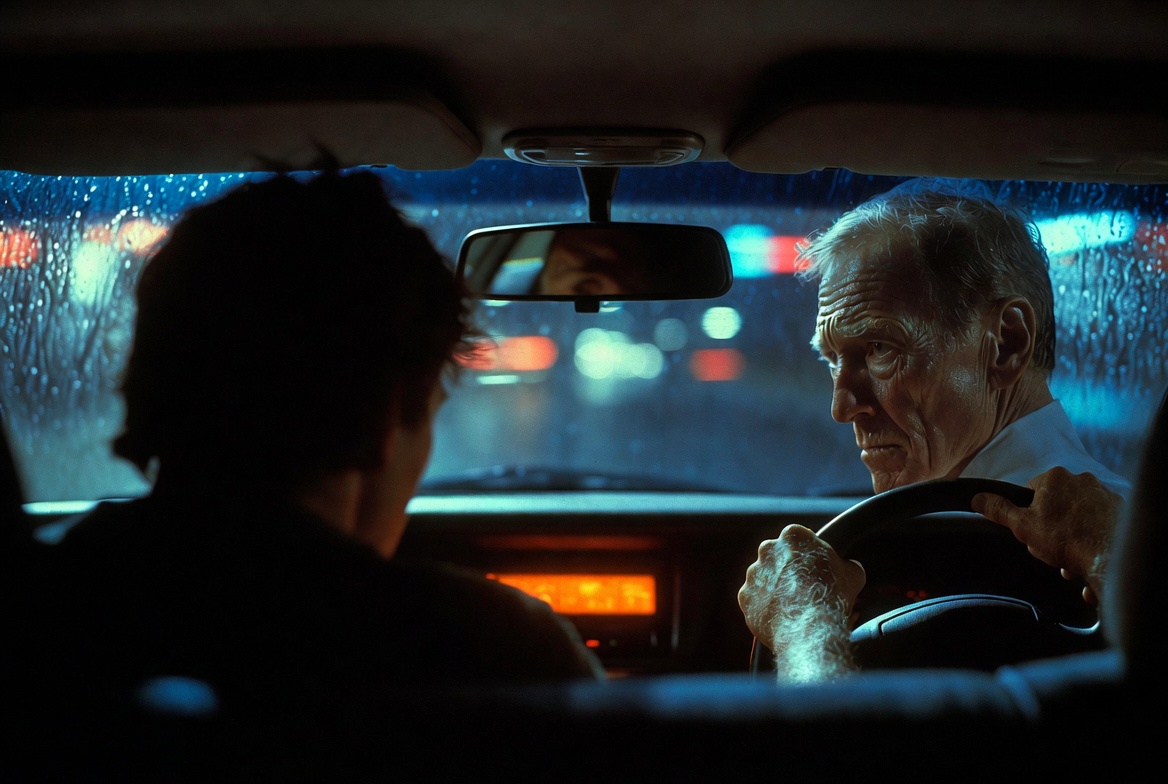
Detroit after midnight had a way of swallowing sound. Streetlights flickered like tired eyes, and the roads stretched long and empty—perfect for a man who’d grown used to silence.
Samuel Brooks, 69, had been driving a taxi for nearly forty years. His hands were calloused, his back stiff, but his mind stayed sharp. Driving gave him something life rarely did anymore:
A sense of direction.
His daughter, Lena, hadn’t spoken to him in almost a decade. Not since she married a man who told her Samuel “wasn’t good enough”—a judgment soaked in classism, racism, and the arrogance of someone who had never worked a day in the grit of Detroit.
Samuel never fought back. He just stepped aside, the way life had taught him to.
One cold evening, he picked up a passenger outside a downtown bar. The man slid into the back seat, head down, voice slurred.
“East Grand Boulevard,” he muttered.
Samuel froze.
He knew that voice. He knew that address.
It was Lena’s husband.
The man who took his daughter away.
Samuel’s grip tightened on the steering wheel, knuckles whitening. He didn’t turn around. Didn’t speak. Just drove.
Halfway through the ride, the man exhaled shakily.
“She left me,” he said. “Packed her bags. Said she couldn’t stay with someone who betrayed her.”
Samuel’s jaw clenched. He kept driving.
“I messed up,” the man continued. “I cheated. I don’t know why. I don’t know what’s wrong with me.”
Samuel’s heart pounded. He wanted to shout. He wanted to slam the brakes. He wanted to ask why he had judged him—a hardworking Black father—while being the kind of man who would destroy his own home.
But Samuel stayed silent.
The city lights streaked across the windshield like ghosts of all the years he’d lost.
When they reached the apartment building, the man hesitated before opening the door.
“I know you hate me,” he whispered.
Samuel finally turned, his eyes tired but steady.
“I don’t hate you,” he said. “But you tell her this…”
He paused, voice cracking.
“Tell her… she still has a home. Even if she forgot that I exist.”
The man swallowed hard, nodded, and stepped out into the cold.
Samuel drove away without looking back.
A week later, as he sat in his small apartment eating dinner alone, a soft knock echoed through the hallway.
He opened the door.
Lena stood there—older, eyes swollen from crying, suitcase at her feet.
“Dad…” she whispered. “I’m sorry.”
Samuel didn’t speak. He didn’t need to.
He simply opened his arms, and she walked into them like she had been trying to find her way back for years.
Outside, the Detroit night hummed quietly. Inside, a future—fragile but breathing—began to take shape.
Lesson
Forgiveness doesn’t erase the past—it gives the future a chance to breathe.