Bridget didn’t call again that night. She didn’t text. She didn’t apologize.
She simply sent a short message at 9:12 p.m.: “Mom, please tell me you didn’t sell the lake house.”
I didn’t respond.
I slept better than I had in months.
The next morning, I woke early, made coffee, and sat at the kitchen table with the window cracked open. The Alabama air was already warm, thick with the smell of honeysuckle and the distant hum of someone mowing their lawn. I watched a cardinal hop along the fence and thought about Arthur—how he used to whistle at birds like they were old friends.
I whispered, “I kept my promise, Art. I built the house. I loved them. I waited. I was patient.”
And then, after a long breath:
“But I’m done being patient with people who treat me like a spare chair they can fold up and store in the garage.”
I didn’t cry. I didn’t shake. I didn’t feel guilt.
I felt… roomy. Like someone had opened a window inside my ribs.
The truth is, the lake house had stopped feeling like mine long before Bridget’s voicemail. It had become a stage where I played the role of “helpful grandmother,” “quiet mother,” “extra pair of hands.” I cooked breakfasts while they slept in. I washed towels while they took the boat out. I stayed behind with the youngest grandchild while everyone else went tubing.
I was the background character in a place I had built from grief and love and cedar.
So when Bridget told me not to come, something inside me finally snapped into clarity.
Not anger. Not revenge. Just truth.
They didn’t want me there. They wanted the house.
And I was done giving pieces of myself to people who only noticed the furniture.
Two days after the voicemail, I drove to the lake house alone. I parked in the gravel driveway and sat for a long moment, looking at the porch Arthur had sketched on napkins. The sage green door. The cedar siding. The swing that creaked when the wind blew just right.
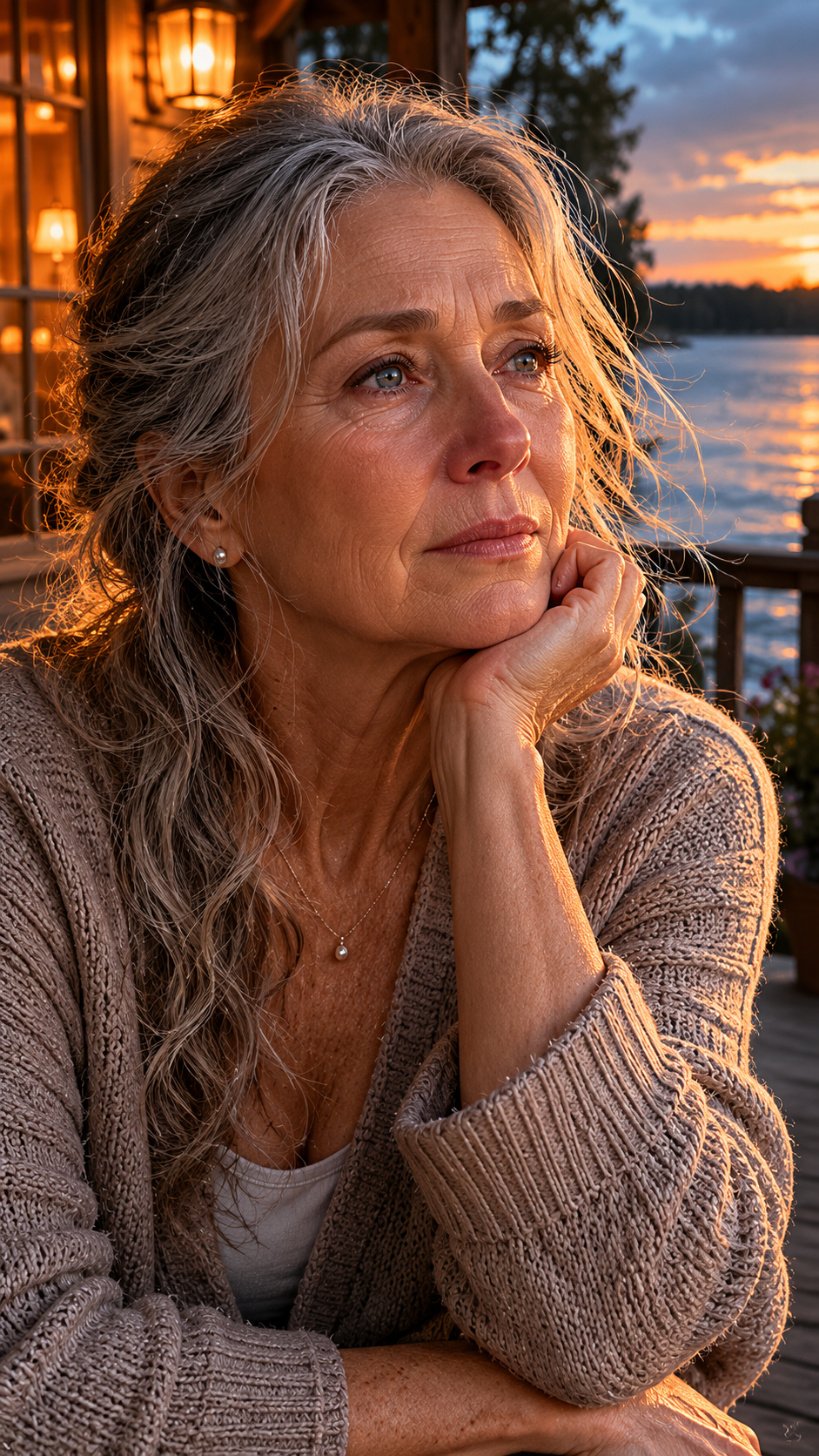
I walked through every room slowly, touching the walls, the window frames, the kitchen counters. I stood on the dock and let the water lap at my ankles. I watched the sun sink behind the pines the way Arthur always imagined.
Then I went inside, sat at the dining table, and made a decision.
Not out of spite. Not out of bitterness. But out of self-respect.
I called a realtor I trusted. A woman named Evelyn who had lost her husband the same year I lost mine. She didn’t ask questions. She didn’t pry. She simply said, “I’ll handle everything, Dorothy.”
And she did.
The house sold in three days.
Not to a family. Not to a vacationing couple. But to a quiet, soft‑spoken man named Mr. Alvarez who wanted a peaceful place to retire after thirty‑seven years teaching high school math.
He walked through the house with reverence, like he understood what it meant to build something with your heart and then let it go.
When he stood on the dock, he closed his eyes and whispered, “This feels like a place where a person could breathe again.”
That was when I knew he was the right one.
I signed the papers that afternoon.
Bridget found out before I even made it home.
She called six times. Then she texted: “Mom. Answer. NOW.”
I didn’t.
I made myself a cup of tea, sat in my recliner, and watched the ceiling fan spin.
At 7:03 p.m., she called again. This time I answered.
Her voice was shrill, frantic, breathless.
“Mom, what did you DO? There’s a strange car in the driveway! Paul says the locks are changed! The kids are crying! What is going on?!”
I let her finish.
Then I said, calmly:
“I made room.”
Silence. A long, stunned silence.
Then: “Room for WHAT?”
“For myself.”
She sputtered. “Mom, you can’t just SELL the house! That house was supposed to stay in the family!”
I closed my eyes.
“Bridget, I am the family. And you told me there wasn’t room for me anymore.”
“That’s not what I meant!”
“It’s exactly what you meant.”
She inhaled sharply, like she was preparing to argue, but I didn’t give her the chance.
“For years, I have been patient. I have been quiet. I have been useful. I have been convenient. I have been the person who shows up, cooks, cleans, watches the kids, and never asks for anything. And you all got used to that version of me.”
“Mom—”
“But that version of me is gone.”
Another silence. This one heavier.
“You sold Dad’s dream,” she whispered.
“No,” I said. “I fulfilled it. And then I let it go before it became a burden instead of a blessing.”
She didn’t respond.
I didn’t fill the silence for her.
Eventually she said, small and wounded, “I don’t understand.”
“I know,” I said. “But one day, when your children treat you the way you treated me, you will.”
She gasped. “That’s cruel.”
“No,” I said softly. “It’s the truth.”
And then I ended the call.
I expected guilt to come. Or regret. Or the ache of loneliness.
But instead, I felt something I hadn’t felt in years:
Freedom.
I took the money from the sale and did something no one expected.
I booked a six‑week trip through the Pacific Northwest. I rented a small cabin near Mount Rainier. I signed up for a watercolor class. I bought myself a pair of hiking boots that actually fit. I joined a group of widows who travel together twice a year. I learned how to make sourdough. I learned how to sleep without checking my phone. I learned how to be alone without being lonely.
I learned how to be Dorothy, not “Mom,” not “Grandma,” not “the person who always says yes.”
Just me.
Bridget didn’t speak to me for three months.
Then one evening, she called. Her voice was quieter. Slower. Less sure of itself.
“Mom… can we talk?”
I said yes.
She apologized—not perfectly, not poetically, but honestly. She said she had taken me for granted. She said she didn’t realize how much she expected from me until I stopped giving it. She said she was scared I didn’t love her anymore.
I told her I did. I always would. But love without boundaries becomes servitude.
She cried. I cried. We talked for a long time.
We are still rebuilding. Slowly. Carefully. Patiently.
But this time, the patience is for me.
I don’t regret selling the lake house. I don’t regret choosing myself. I don’t regret making room.
Because sometimes the bravest thing a woman can do—after a lifetime of giving—is to finally open her hands and let go.
And sometimes, the people who love you will learn to meet you where you stand.
And sometimes, they won’t.
But either way…
You get to breathe again.