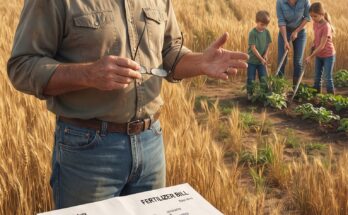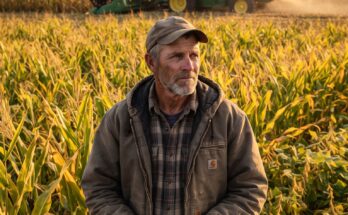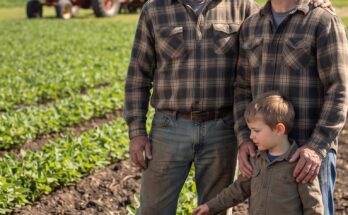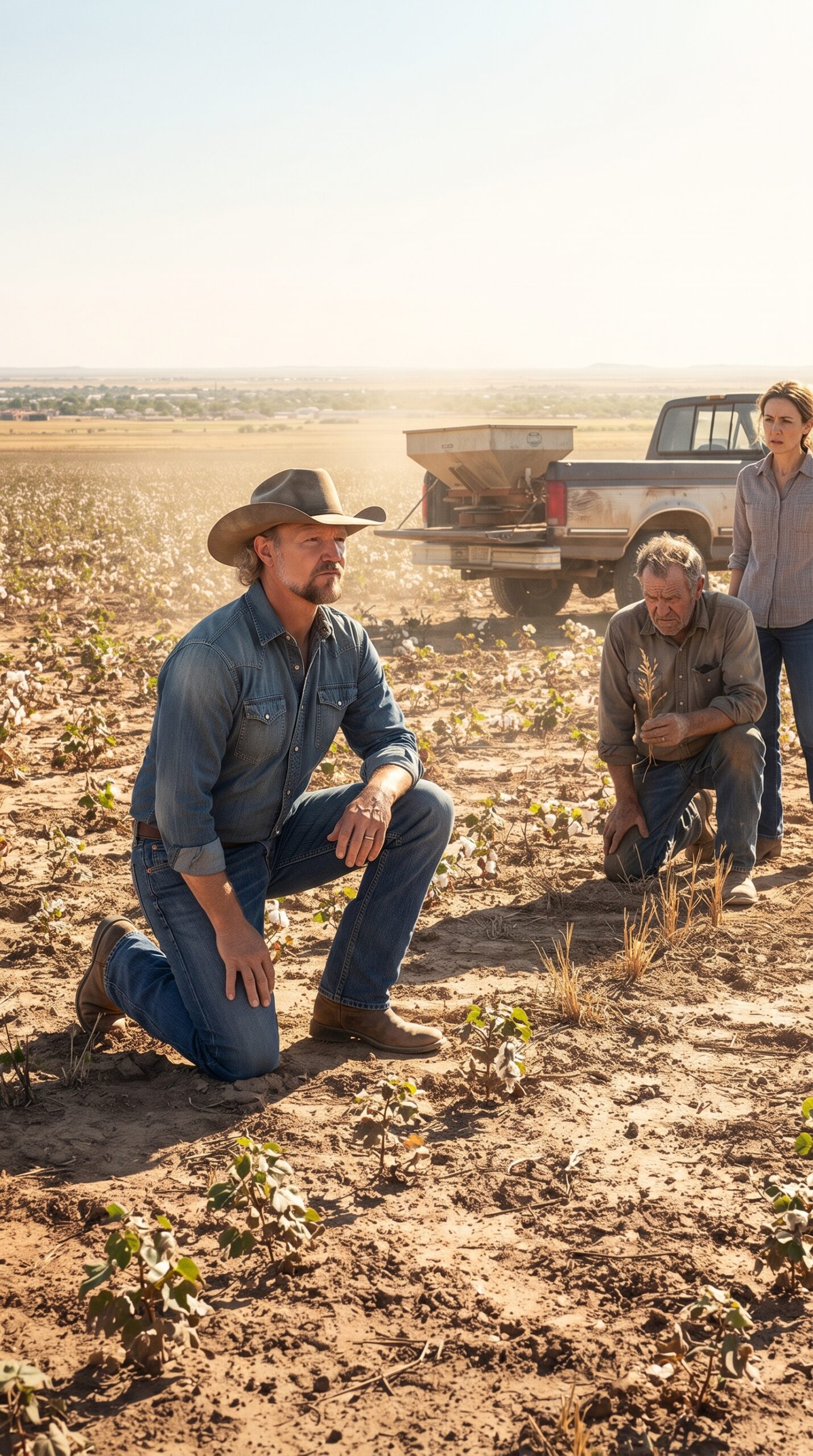
For Kody Carson, the fertilizer question came down to one blunt piece of logic. Spending heavily on a crop before you know whether the ground will even support it isn’t responsible farming — it’s a bet with the odds stacked against you. As he put it plainly at the time: he didn’t see how he could call it financially prudent to book expensive fertilizer when he wasn’t even sure he’d make a crop worth fertilizing. That single sentence captures the entire dilemma facing farmers like him this year.
It wasn’t just talk. Carson genuinely wasn’t buying fertilizer ahead of planting, and going into the season, he was leaning toward skipping it for his cotton acres altogether rather than pre-committing money he might never recoup. For a 2,400-acre operation, that’s not a small decision — it’s a fundamental rethink of how the crop gets grown this year, built around minimizing exposure rather than maximizing yield.
He wasn’t alone in that thinking, and seeing how other farmers around him were handling the same math makes the picture clearer. In Petersburg, Texas, a grower raising cotton, corn and sorghum also skipped buying fertilizer in advance. By the time spring arrived, he was facing fertilizer costs that had jumped from roughly $400 a ton earlier in the year to well over $550 a ton — a jump steep enough to make anyone hesitate. Even so, he chose to move forward with spring planting anyway, treating farming less as a pure financial calculation and more as a commitment to a livelihood and a family tradition that goes back generations. His plan wasn’t to skip fertilizer entirely, but to apply it as sparingly as the crop could tolerate — squeezing every bit of value out of every dollar spent.
Not every farmer in the region even got that far. Near Tulia, one wheat grower had planted the previous autumn only to watch the crop barely grow because the rain never came. By spring, he was hoping his insurance adjuster would simply declare the field a total loss — not because he wanted to give up, but because harvesting a crop that small wasn’t worth the cost of the fuel it would take to bring it in. When the math gets that lopsided, walking away can be the only move that doesn’t lose more money than it saves.
What ties all of these stories together is bigger than any one farm. A conflict overseas disrupted supply routes that a significant share of U.S. commercial fertilizer depends on, pushing prices up sharply and quickly across the Plains states — Texas, Kansas, Oklahoma, South Dakota and Nebraska among them. That spike landed on top of a drought that was already squeezing yields, and on top of crop prices that hadn’t recovered from years of soft export markets. Three separate pressures, all hitting at once, all pointing farmers toward the same defensive posture: spend less, plant leaner, and accept a smaller ceiling on this year’s crop in exchange for a smaller downside if things go wrong.
Officials have acknowledged the pressure farmers are under, with the U.S. Department of Agriculture pointing to efforts aimed at boosting domestic fertilizer production to ease costs longer term. But that kind of shift doesn’t happen in time to help a farmer who has to decide, right now, whether to spend thousands of dollars on a crop that a rain gauge — not a policy announcement — will ultimately determine.
That’s the part of this story that’s easy to miss from the outside. It isn’t really about whether farmers can afford fertilizer in the abstract. It’s about being asked to make a large financial commitment months before you’ll know whether the conditions that justify it will actually hold. Pay for the fertilizer, and you might be pouring money into ground that won’t produce enough to pay it back. Skip it or scale it back, and you might be capping your own yield right when you need every bushel you can get. There isn’t a version of this decision where the risk disappears — only one where a farmer decides which risk he’s more willing to carry.
For Kody Carson, that meant walking into this season without the safety net he’d normally count on, watching his wheat numbers as a warning sign, and making a cotton-planting decision built around one unavoidable question: not “can I afford to buy fertilizer this year,” but “can I afford to be wrong about whether I need it.”
He won’t know the answer until the crop is in the ground, the rain either comes or doesn’t, and harvest tells him what his bet was actually worth.