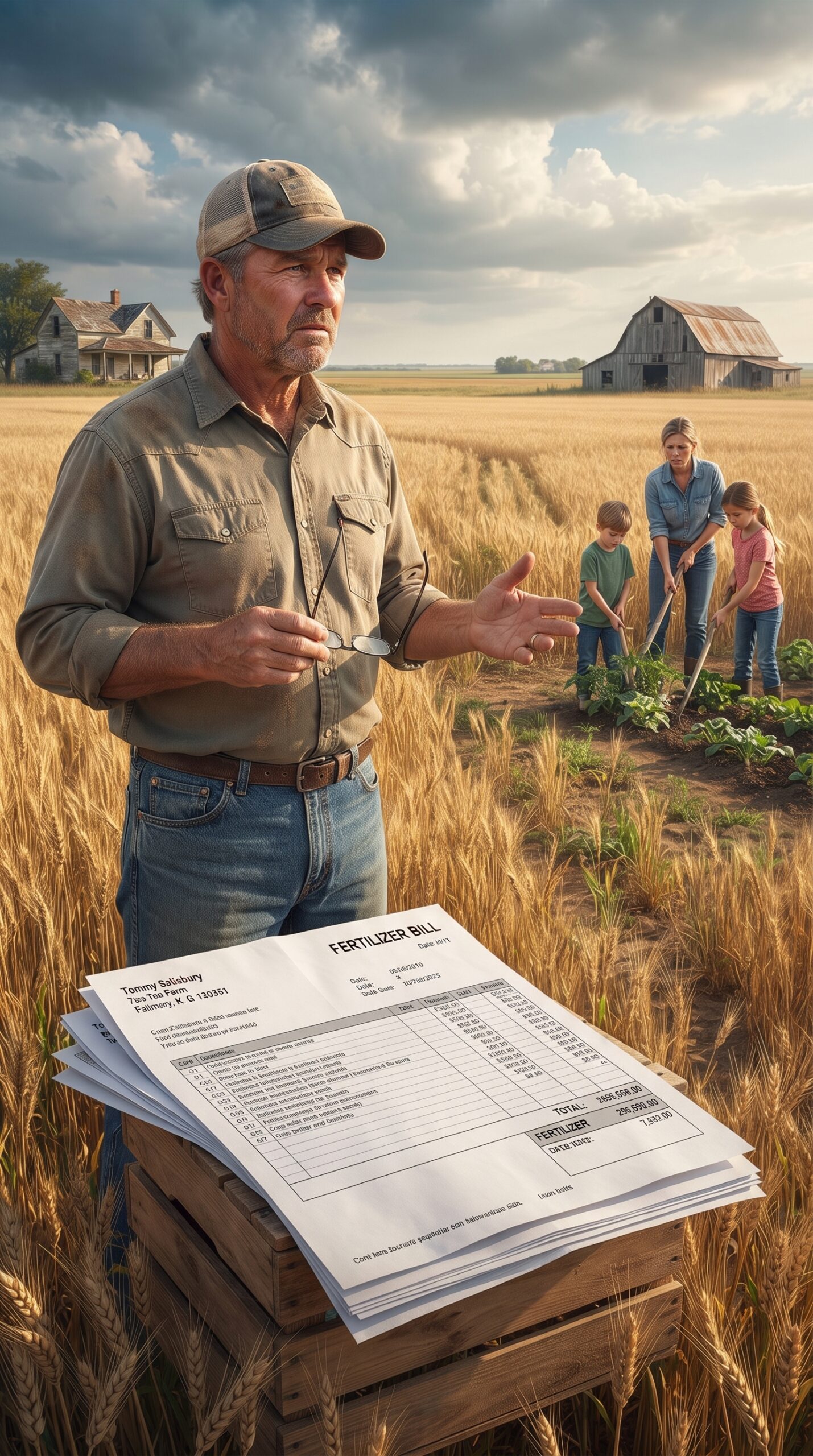
When the fertilizer bill landed, Tommy Salisbury didn’t have the luxury of waiting to see if prices would come back down. Spring planting doesn’t wait for the market to be reasonable. So he made the call that a lot of Midwestern and Southern farmers were quietly making at the same time: he decided to shift some of his acreage away from crops that lean hard on nitrogen fertilizer.
Milo — the cereal grain he’d normally plant a good chunk of his ground in — was one of the first things he scaled back. In its place, more soybeans. It’s a plant that fixes a lot of its own nitrogen from the air rather than pulling it entirely from a bag, which meant less exposure to a fertilizer market that had turned unpredictable almost overnight. On the acres he kept in more nitrogen-hungry crops, he planned to spread fertilizer thinner than usual — enough to keep the crop viable, not enough to hit the textbook recommendation.
It’s a reasonable-sounding plan on paper. In practice, it’s a bet with real teeth. Spread fertilizer too thin and yields can drop in ways that don’t show up until harvest, when it’s far too late to fix. Lean too hard into soybeans and you’re exposed if soybean prices soften while corn and milo prices happen to climb. There is no version of this decision that removes the risk. There’s only a version that trades one risk for another and hopes it’s the smaller one.
Tommy wasn’t guessing in a vacuum. The pressure he felt was part of something much bigger playing out across American farm country this year. The fertilizer spike traced back to a supply squeeze: a conflict overseas had disrupted a major channel of nitrogen-based fertilizer that normally flows out of Gulf shipping routes. Urea and other nitrogen products saw sharp price jumps across multiple states almost simultaneously, and in some markets, anhydrous ammonia — a key nitrogen source — climbed well past what farmers were used to budgeting for.
Surveys of farmers around the country found the same story repeating itself. A majority said their finances were getting worse specifically because of rising fertilizer and fuel costs. In the South, the numbers were especially stark — many farmers said they simply couldn’t afford to buy the full amount of fertilizer their fields normally required, and only a small share had managed to pre-order before prices took off. Farmers described cutting corn acreage, leaning harder into less input-hungry crops like soybeans, and stretching every bag of fertilizer they did buy as far as it would go.
And it wasn’t just fertilizer. Diesel prices stayed elevated too, adding another layer of cost to planting, spraying, and harvesting equipment that doesn’t run on hope. Meanwhile, crop prices — what farmers actually get paid at the end of the season — hadn’t moved nearly as much. Some growers put it bluntly: they were paying this year’s sky-high input costs while getting paid prices that felt more like a decade ago. That gap is exactly what turns a fertilizer decision into a gamble instead of a routine business expense.
For Tommy, that meant this wasn’t really a choice between “buy fertilizer” and “don’t.” It was a choice about which version of risk he was more willing to live with for the next several months — a lighter crop that costs less to grow, or a heavier one that costs more but might pay off bigger if the weather cooperates and the harvest comes in strong.
There’s a reason this matters beyond one farm in Tulsa County. When enough farmers make the same defensive calls — less corn, thinner fertilizer applications, fewer acres of the crops that need the most input — it can ripple outward into how much grain, meat, and feed actually make it to market later in the year. Farmers are, in a very real sense, absorbing the shock first so the rest of the supply chain doesn’t feel it as sharply, at least not right away.
Tommy Salisbury doesn’t know yet whether his bet will pay off. Nobody does until the combine rolls through the field in the fall. What he does know is that the decision wasn’t made lightly, wasn’t made with full information, and wasn’t really optional in the way most business decisions are supposed to be.
That’s the part that doesn’t always make it into the headlines: for farmers like Tommy, “gamble” isn’t a metaphor this year. It’s the actual job.