For three years, Soon-Yi said nothing.
She did not call to take sides. She did not plead or guilt or bargain. When neighbors asked about her children, she smiled and said they were busy. She continued opening the house — cleaning the rooms, washing the spare bedding, cooking too much food and quietly giving the rest to the family two doors down.
What no one knew was that she had started writing.
Every week, she filled pages in a composition notebook — not a diary, but letters. One for each child. She wrote about the day each of them was born. The specific worry she carried for each one. The private pride she never said out loud. She wrote about Jae-won — not the version of him that existed in the will dispute, but the man who used to hum to himself while unloading inventory at 5 a.m.
She wrote about the house. What she had imagined when she signed the papers. What it felt like now.
She never sent the letters. She wasn’t sure she meant to.
But in the spring of her fourth year alone, her second daughter — Ji-yeon, the quietest of the five — drove up unannounced on a Saturday. No explanation. She just showed up at the door with her mother’s favorite red bean pastries and said, “I missed you.”
Soon-Yi let her in without a word.
They sat at the kitchen table for six hours. Ji-yeon read some of the letters. She wept. She made phone calls.
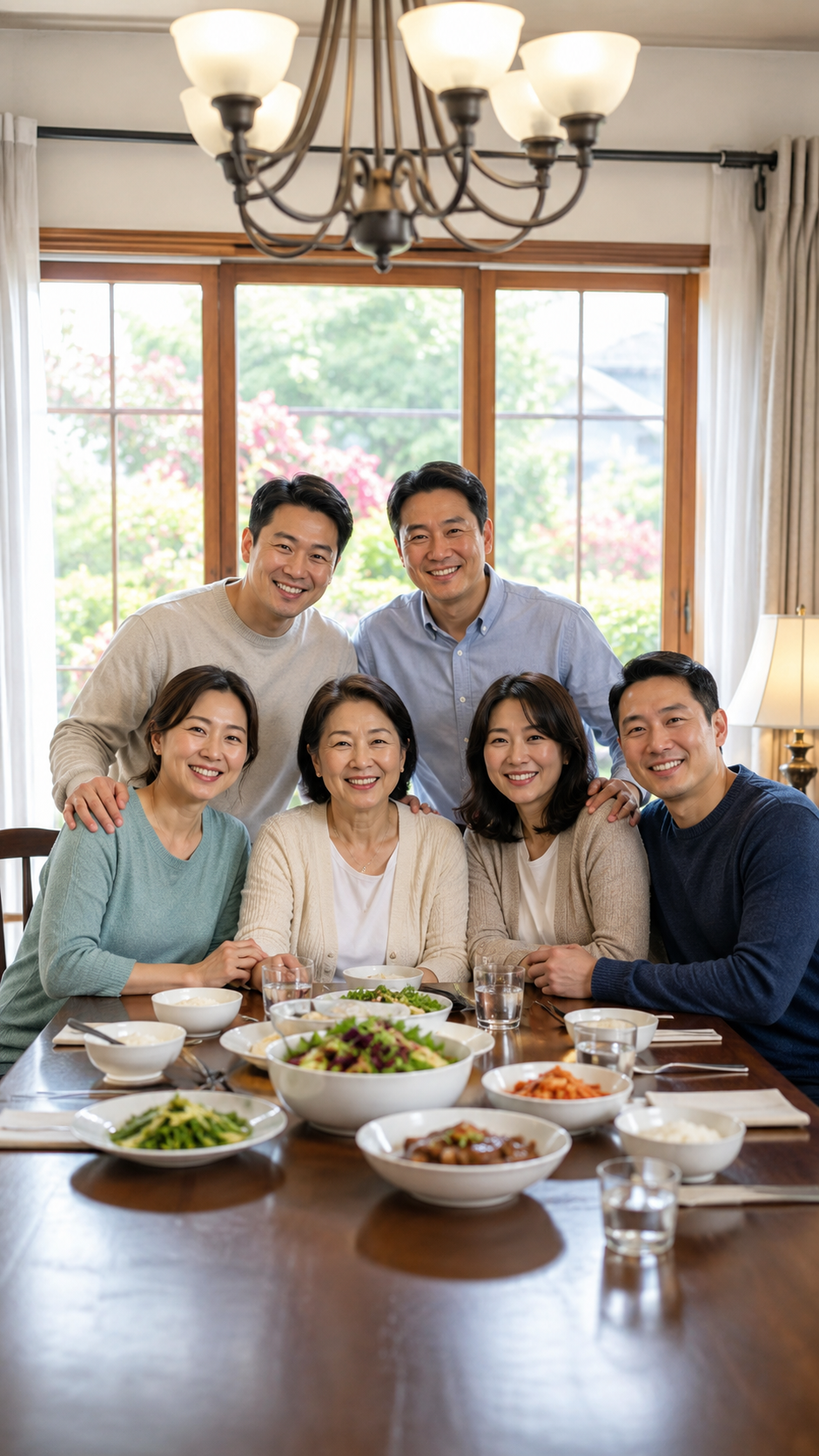
It took another full year. It was not clean or easy or complete. One sibling still keeps his distance. But on a Sunday last November, four of the five sat in Soon-Yi’s dining room.
She had set six places, as always.
This time, five were filled.