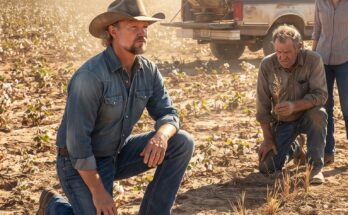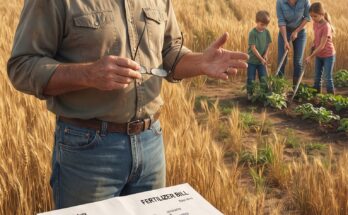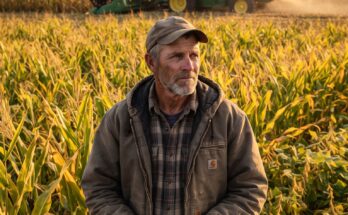
After sixty years of farming the same ground, Orville Williams has developed a kind of instinct that doesn’t come from a spreadsheet. It comes from living through enough bad years to know which decisions make a bad year worse. And when this season made clear that a real loss was coming no matter what, his answer wasn’t complicated. As he put it, his attitude was to stay the course and not make any new purchases. No panic moves. No trying to spend his way out of a problem the weather had already decided. Just discipline, and a refusal to compound a bad year with a reckless one.
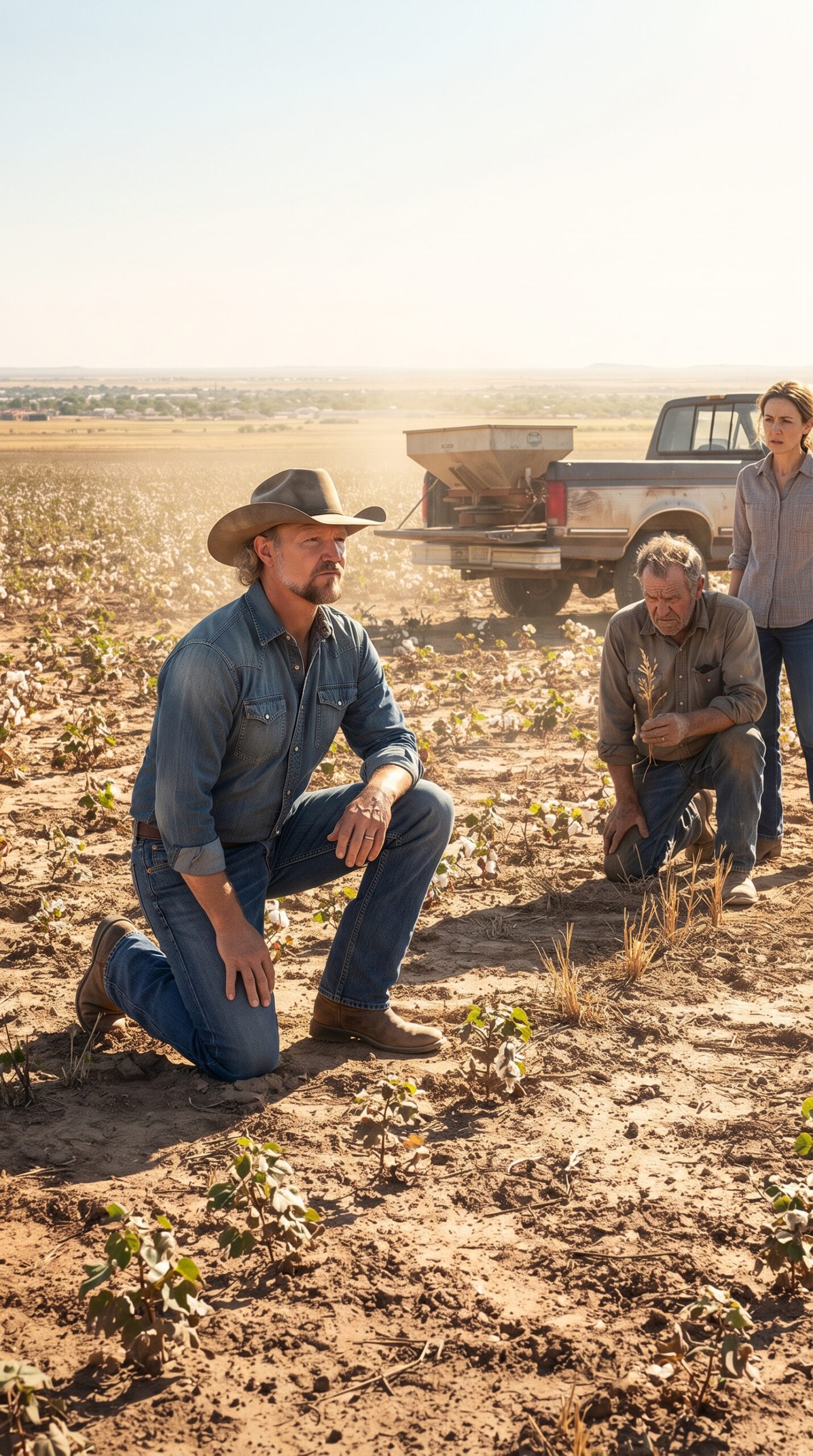
That kind of restraint matters more this year than most. Williams and farmers like him already know they’re going to lose money on this crop — there’s no version of the math that changes that outcome. His irrigated acres, which should be producing close to 100 bushels per acre in a normal year, are on track for somewhere between 30 and 40. His dryland wheat, dependent entirely on rain that simply didn’t show up when it was needed, may only yield 10 to 15 bushels per acre. When you’re already looking at a loss, every extra dollar spent chasing a better outcome is a dollar that might just deepen the hole. Holding steady, rather than spending more to try to save what’s already compromised, is its own form of financial protection.
The forces behind this didn’t arrive one at a time — they stacked on top of each other. Record-setting drought and unusually hot stretches hit the central and southern Plains early in the season, drying out soil right when the wheat needed it most. That stress made the crop far more vulnerable to two plant diseases moving through the region — wheat streak mosaic virus and barley yellow dwarf virus — both of which sap a plant’s potential even in fields that technically survived. Layer rising fertilizer costs, climbing diesel prices, and tariff-related pressure on top of that, and you get a season where the crop was smaller and the cost of growing it was higher, at the same time, with no relief on either side.
Agricultural experts tracking the season put real numbers behind what farmers like Williams were feeling on the ground. Kansas’s wheat crop condition ranked among the worst seen in roughly the last four decades, with well over half of the state’s crop rated “poor” or “very poor” by mid-May. The last time conditions looked this rough was during a severe drought a few years earlier — and some comparisons reached back even further, to yields the state hadn’t seen since the early 1970s. Across the state, roughly 17% of planted wheat acres were projected to go unharvested entirely, left in the field because bringing in the crop would have cost more in fuel and labor than the grain itself was worth. State agronomists tracking the season didn’t sugarcoat it, describing the conditions facing growers as genuinely tough — among the hardest stretches Kansas wheat farmers had faced in a long while.
That reality doesn’t stay confined to farm country, either. Agricultural specialists have pointed out that a smaller, more expensive wheat crop eventually works its way to everyone else — showing up in higher prices at the bakery counter, or in the loss of international buyers who look elsewhere when U.S. supply tightens and prices climb. What happens in a dry field outside Montezuma, Kansas, doesn’t stay outside Montezuma for long.
For Williams personally, none of this changes the basic arithmetic he’s facing this season: less wheat, at a higher cost, with a disease problem layered underneath a drought problem, in one of the toughest years his state has seen in decades. What it does change is how he chooses to respond to it. Sixty years of farming through hard stretches taught him that the worst thing you can do in a losing year is spend like it’s a winning one. So he isn’t chasing this season. He’s absorbing it — protecting what he can, cutting his exposure where he can’t, and trusting the discipline that’s carried him through every difficult year before this one.
Whether that’s enough to get him through 2026 in reasonable shape is something only the combine, and the fall ledger, will be able to answer. But if six decades of experience count for anything, it’s this: Orville Williams has seen hard years end before. He’s betting, quietly, that this one will too.