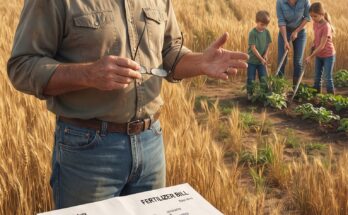
To understand why Kody Carson is holding off on fertilizer, you have to understand what’s happened to fertilizer prices — and why the timing could not be worse.
According to Reuters reporting, fellow West Texas farmer Tom Gregory, who grows cotton, corn, and sorghum near Petersburg, watched fertilizer costs climb from around $402 per ton in February to roughly $558 per ton by April — a jump of nearly 40% in just a couple of months. That spike has been tied in part to disruption from the Iran conflict, which rattled global fuel and chemical markets that commercial fertilizer production depends on heavily.
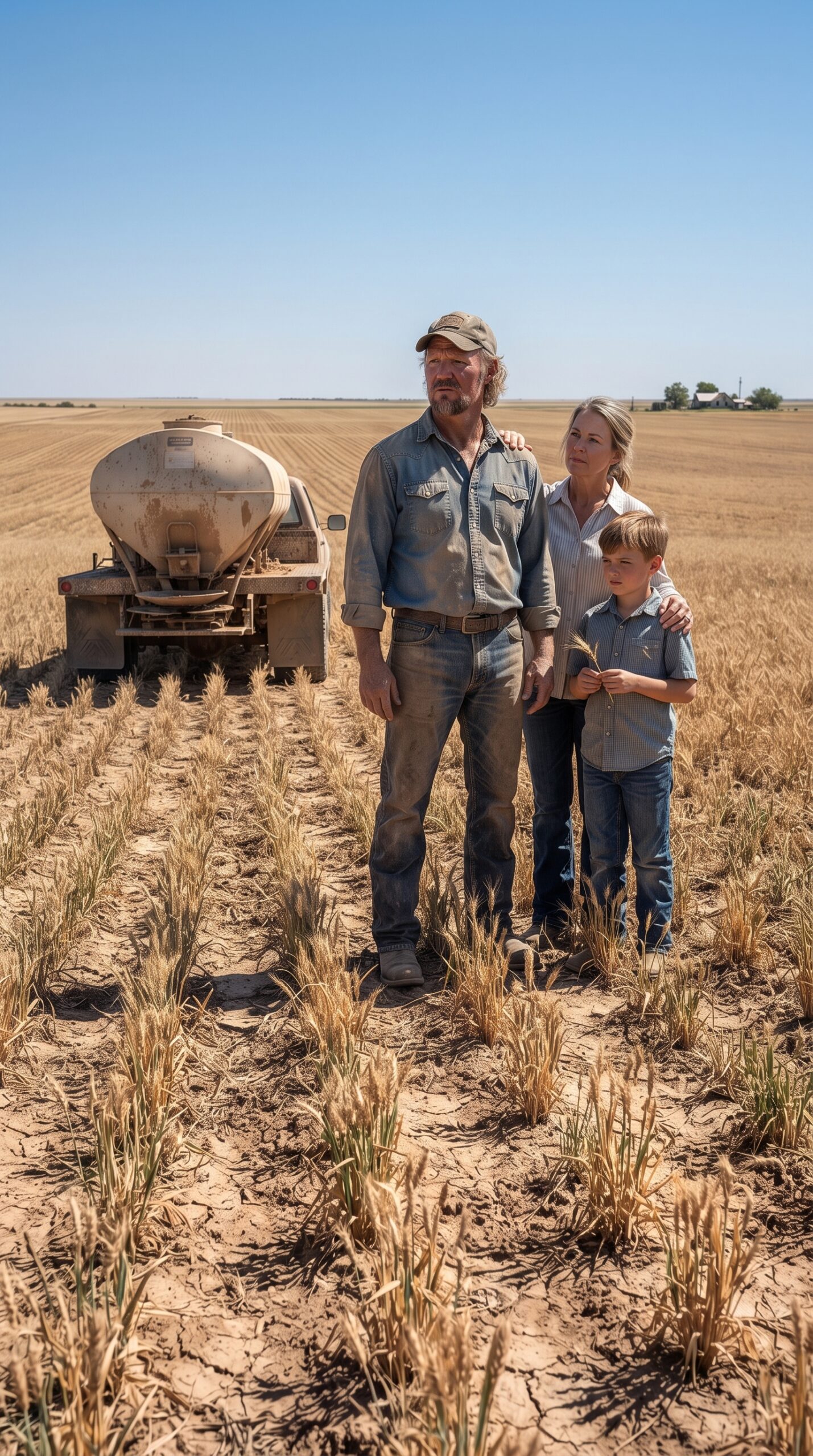
Layer that on top of a drought that’s already devastating yields, and you get the trap Carson and farmers like him are caught in: the exact moment fertilizer becomes most expensive is the exact moment their fields are least likely to produce a crop big enough to justify buying it.
Carson put it simply to Reuters — asking, in essence, how a farmer is supposed to responsibly spend on high-priced fertilizer when there’s no guarantee there will be a crop worth fertilizing at all. It’s not a rhetorical question. It’s the operating logic driving decisions across the region right now.
He’s not exaggerating the stakes, either. His winter wheat yield estimate — 18 to 20 bushels per acre against an expected 80 — represents roughly a 75% shortfall. For an operation the size of Carson’s, that’s not a bad season. That’s a financial gut-punch that reshapes every decision that comes after it, including whether to spend on the next crop at all.
Gregory, for his part, is choosing to proceed anyway. Reuters reported that he intends to keep planting because farming is both his livelihood and a family tradition passed down through generations — but he’s planning to apply fertilizer as sparingly as he possibly can, trying to thread the needle between keeping his soil productive and not burning cash on inputs that a dry summer could waste entirely. In past years, Gregory has leaned on producing bigger yields to absorb rising costs — but that strategy only works if the yields actually show up, and this year, drought is putting that assumption in serious doubt.
This isn’t isolated to two farms. Reuters’ reporting placed this story amid a broader pattern across Texas, Kansas, Oklahoma, South Dakota, and Nebraska — a wide swath of the Plains where drought and rising input costs are compounding at the same time. In Tulia, Texas, another farmer featured in the reporting was hoping his insurance adjuster would declare his stunted crop a total loss, specifically so he wouldn’t have to spend more money on fuel just to harvest a field that had already failed.
That detail says a lot about where things stand. When a farmer is hoping for a declared loss instead of hoping for a harvest, the math has stopped being about maximizing a crop and started being about minimizing the bleeding.
The USDA, when asked for comment by Reuters, said it was continuing to evaluate data on fertilizer usage trends, and pointed to broader efforts aimed at increasing domestic fertilizer production to help stabilize affordability going forward. Whether that translates into meaningful relief for farmers making decisions right now — this planting season, not some future one — remains an open question.
For Carson, the decision isn’t made in a vacuum. It’s made acre by acre, weighing a wheat crop that already disappointed against a cotton crop that hasn’t been planted yet, with a fertilizer bill that keeps climbing no matter which way the weather breaks.
There’s no dramatic resolution here, and that’s sort of the point. Farmers like Carson aren’t heroes overcoming a challenge in three acts — they’re making the best call they can with incomplete information, real financial exposure, and a season that could still turn either way.
What this story really captures isn’t a single farmer’s crisis. It’s a snapshot of an entire agricultural region absorbing multiple shocks — climate, geopolitics, and market pricing — all landing on the same planting season, all at once.
Whether the rain comes in time is out of anyone’s hands. Whether the fertilizer gets bought in time is, painfully, still a decision every one of these farmers has to make for themselves.