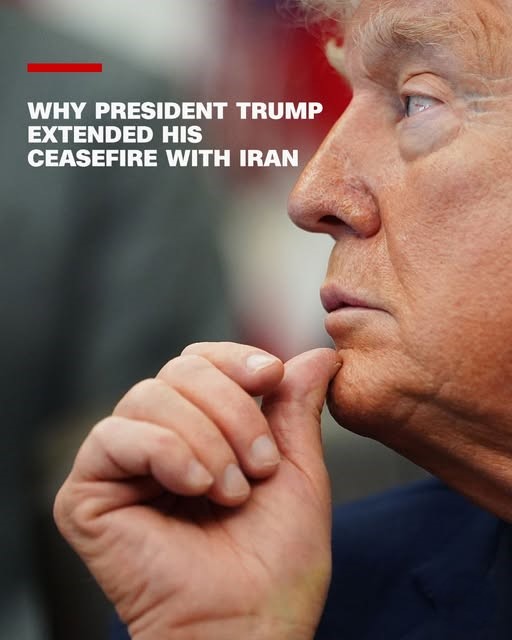
President Donald Trump extended the U.S. ceasefire with Iran after concluding that Tehran’s government was “seriously fractured” and unable to deliver a unified negotiating position, according to multiple reports from U.S. and international outlets.
The ceasefire had been set to expire on Wednesday, but Trump announced an open‑ended extension following urgent requests from Pakistan’s Prime Minister Shehbaz Sharif and Field Marshal Asim Munir, who asked Washington to delay any new military action until Iran could organize its negotiating team.
Trump said the U.S. would “hold our attack… until such time as [Iranian] leaders and representatives can come up with a unified proposal.”
Pakistan’s Role in the Extension
Pakistan has been acting as the primary intermediary between Washington and Tehran. Officials in Islamabad urged Trump to extend the truce to prevent the collapse of planned talks, which had already been thrown into uncertainty after Iran informed mediators it would not attend negotiations while the U.S. naval blockade remained in place.
Pakistani leaders publicly thanked Trump for agreeing to prolong the ceasefire, saying the extra time was essential to keep diplomatic channels open.
Iran’s Position and Internal Divisions
Iranian state media reported that Tehran viewed attending talks under current conditions as “a waste of time,” citing the U.S. blockade of Iranian ports as a violation of the truce. Iranian officials also pointed to “contradictory messages” from Washington and said the blockade amounted to an “act of war.”
U.S. officials, however, believe Iran’s hesitation stems from internal disagreements within its leadership, which Trump cited as a key reason for extending the ceasefire.
Blockade Continues Despite Ceasefire Extension
Although Trump extended the ceasefire, he ordered the U.S. naval blockade of Iranian shipping to continue, calling it a necessary pressure tool while negotiations remain stalled. He said the military would “remain ready and able” should talks fail.
This decision has complicated efforts to restart diplomacy, as Iran has refused to send negotiators until the blockade is lifted.
A Strategic Pause, Not a Breakthrough
Analysts say the extension reflects a strategic pause rather than a diplomatic breakthrough. Talks remain on hold, Vice President JD Vance’s planned trip to Islamabad has been delayed, and both sides warn they are prepared to resume fighting if negotiations collapse.
For now, the ceasefire extension buys time — but leaves the underlying disputes over the Strait of Hormuz, Iran’s nuclear program, and the U.S. blockade unresolved.