Walter Hayes had lived long enough to know that land can be stolen, cattle can be lost, and storms can tear down everything a man builds — but betrayal from inside his own home was a different kind of danger. At sixty‑eight, he was a respected Texas rancher, a man whose name carried weight at auctions, feed stores, and county meetings. Yet for all his experience, he found himself wrestling with a fear he never expected: the possibility that the woman he married might not love him at all.
Claire Dawson entered Walter’s life like a quiet sunrise. She was nearly thirty years younger, soft‑spoken, hardworking, and uninterested in the spotlight that came with being married to a wealthy rancher. Walter had lost his first wife years earlier, and loneliness had settled into his bones like winter cold. Claire brought warmth back into his life — cooking meals, tending to the garden, helping with small ranch tasks, and sitting with him on the porch during long Texas evenings. For a time, Walter believed he had been given a second chance at companionship.
But the world around him didn’t see it that way. At church dinners, people whispered. At livestock auctions, men nudged each other and smirked. At the feed store, conversations stopped when Walter walked in. The gossip was always the same: Claire married him for money. Claire was waiting for him to die. Claire was planning to take the ranch.
Walter tried to ignore it, but the poison spread faster when his nephew, Dylan Hayes, began repeating the rumors directly to him. Dylan was young, ambitious, and always circling the ranch like a vulture waiting for a carcass. He insisted Claire was manipulating Walter. He insisted she was after the inheritance. He insisted no young woman would marry an older rancher unless she wanted something.
Walter never confronted Claire about the rumors. Instead, he let them fester. He watched her more closely. He questioned her kindness. He doubted her intentions. And eventually, he let suspicion grow into something darker — a belief that he needed to test her loyalty before she broke his heart or took his land.
One evening, after weeks of sleepless nights, Walter made a decision that would change everything. He walked into the kitchen holding a leather folder and delivered a lie so heavy it nearly crushed him.
“It’s over,” he said. “The ranch is finished. The bank’s taking everything.”
He expected panic. He expected tears. He expected the truth to reveal itself in her reaction.
Instead, Claire turned from the stove slowly, confusion in her eyes but no fear of losing comfort or wealth. She sat down, folded her hands, and asked a single question:
“How long do we have?”
Walter repeated the lie, emphasizing that he had lost everything. But Claire didn’t flinch. She didn’t ask about money. She didn’t ask about her future. She didn’t ask what she would get out of the marriage now that the ranch was supposedly gone.
She asked where to start.
That answer rattled Walter more than any accusation ever had. It was not the reaction of a gold‑digger. It was the reaction of a partner. A woman ready to fight beside him.
But Walter, still blinded by doubt, pushed the test further. He told her she could leave if she wanted. He told her she didn’t have to stay with a broke old man. He told her she deserved better.
Claire didn’t raise her voice. She didn’t cry. She simply said, “I married you, not your land.”
Her calmness unsettled him. Her loyalty contradicted everything he had convinced himself to believe. And yet, instead of apologizing, he continued the charade, determined to see whether her resolve would crack.
Over the next days, Claire began quietly reorganizing their life. She cut unnecessary expenses. She made lists of items they could sell. She researched part‑time jobs she could take in town. She even suggested renting out part of the ranch house to travelers. Walter watched all of this in silence, guilt growing heavier with each passing hour.
But the real shock came when he discovered her secret.
One afternoon, while Claire was out hanging laundry, Walter went into the small office she used for bookkeeping. He intended to look for signs of hidden motives — maybe bank statements, maybe evidence she was planning to leave him, maybe something that would justify his suspicions.
What he found instead was a folder labeled with his name.
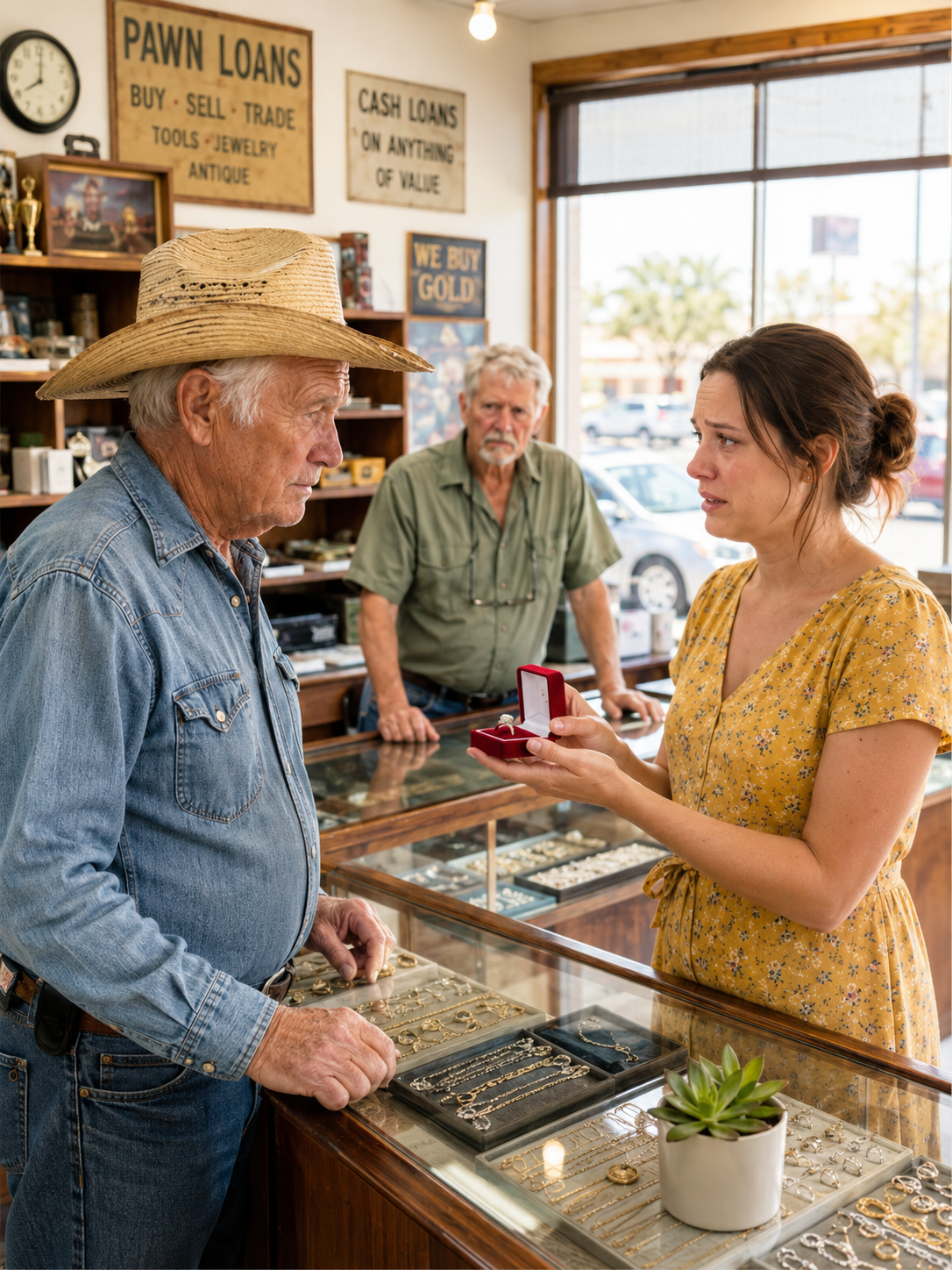
Inside were documents he had never seen before: receipts, letters, and financial statements. Claire had been quietly paying off small ranch debts for months. She had been selling her own belongings — jewelry, old furniture, even a family heirloom bracelet — to help stabilize the ranch without telling him. She had been protecting him from stress, shielding him from burdens, and trying to keep the ranch afloat behind the scenes.
And then he found the final document: a savings account in her name, untouched except for one note written in her handwriting.
“For Walter, if things ever get bad.”
It wasn’t a secret stash to escape with. It was a safety net for him.
Walter sank into the chair, overwhelmed by shame. The woman he doubted, the woman he tested, the woman he suspected of betrayal — she had been sacrificing for him quietly, lovingly, without asking for recognition.
When Claire returned and saw him holding the folder, she froze. She thought he would be angry. Instead, he broke down.
He confessed everything — the rumors, the doubts, the test, the lie about losing the ranch. He told her he had been afraid she didn’t love him. He told her he had let other people’s voices drown out his own judgment. He told her he had failed her.
Claire didn’t yell. She didn’t storm out. She simply sat beside him and said, “Walter, love doesn’t need to be tested. It needs to be trusted.”
In that moment, Walter realized the truth: the ranch had never been the thing at risk. His marriage was. And he had nearly destroyed it by believing the worst instead of seeing the best.
The next morning, Walter called Dylan and told him to stay away from the ranch permanently. He stopped listening to gossip. He stopped letting insecurity guide his decisions. And for the first time in months, he looked at Claire not through the lens of fear, but through the clarity of gratitude.
The test he created had revealed a truth he never expected — not about Claire, but about himself. He had been the one failing the marriage, not her.
And from that day forward, he vowed never to test her love again.