The photograph was of a young woman in a graduation gown, laughing, with my chin and my eyes.
“That’s my daughter,” I whispered. “Claire. She died fourteen years ago.”
Dr. Reeves nodded slowly. “I know. And I need you to hear the rest before you decide what to feel.”
Claire had been a doctoral student in neuroscience. At thirty-one, she died of early-onset Alzheimer’s, a rare genetic form that took her memory in under three years. I nursed her through all of it. At the end she didn’t know my name, but she still held my hand.
What I had never known was that Claire, in the early stages, had enrolled in a clinical research study at a university hospital. She had signed forms giving her records and tissue to a long-term familial study. The study’s lead physician, Dr. Arthur Voss, had flagged something in her genetics: a protective variant that ran in the maternal line. In other words, it came from me.
“Your genome appears to carry a protective factor,” Dr. Reeves said. “Researchers believed that studying you, over time, might help with treatments for the disease that took your daughter. But Dr. Voss died four years ago. His study was inherited by a private company, and the people running it wanted data they’d never been authorized to collect.”
“Daniel,” I said.
“Daniel’s company is a major investor.” He turned the screen. “I want to be careful. I’m a physician, not an investigator. But your drink contained a cholinesterase inhibitor at a low, daily dose, along with a compound that mimics early cognitive symptoms. The combination would cause fatigue and forgetfulness, and over months, it would let someone argue that you were declining, which would make it easy to document your ‘disease progression’ under the research file.”
I couldn’t breathe. “He was making me sick.”
“He was inducing symptoms while collecting samples. The doses were low enough not to kill you, but they were not safe, and they were certainly not consented to.”
I sat in that office for a long time. Dr. Reeves brought me water and a box of tissues and did not rush me.
“Why would he marry me?” I finally asked. “He could have paid someone.”
“Because a spouse has legal standing,” he said gently. “As your husband, he could sign medical releases, manage your records, and, eventually, be your guardian if your cognition declined. The marriage wasn’t incidental, Mrs. Bennett. It was the mechanism.”
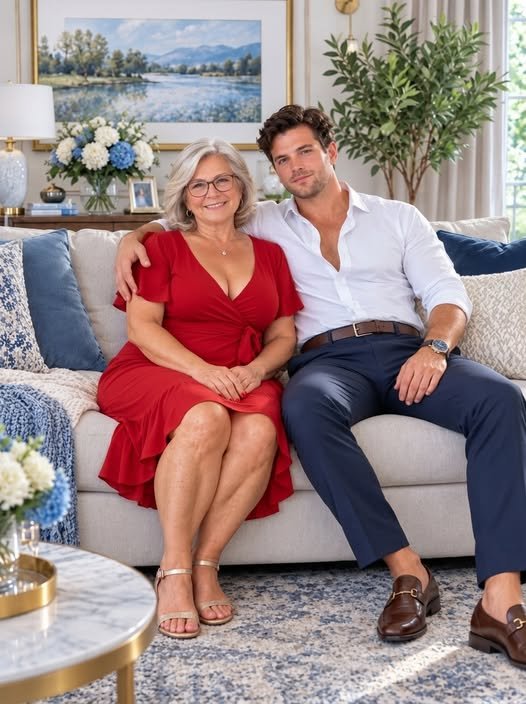
Six months of flowers. Six months of breakfast in bed. I had been proud of my courage in loving again.
I thought of the voice at the window. If this continues, we could lose her. He hadn’t meant losing me. He’d meant losing access.
I did not confront Daniel that night. I went home, smiled when he handed me the cup, and poured it down the sink when he left the room.
The next morning I called my nephew Peter, who is a lawyer, and he put me in touch with a woman named Ellen Marsh, a former prosecutor who handled medical fraud. By noon I was sitting in her office with Dr. Reeves’s report, the lab results, and a recording I’d made on my phone the previous night, of Daniel’s voice murmuring at the window.
“This is very strong,” Ellen said. “But I want more. Do you feel safe going home?”
“No.”
“Then you won’t. We’ll move you today.”
I stayed with Peter and his wife. Ellen contacted the state attorney general’s medical fraud unit and the university’s research oversight board. Within three days, investigators had obtained a warrant for the private company’s records and for the small dark bottle, which was still in Daniel’s coat pocket.
They arrested Daniel at his office on a Thursday morning.
I did not watch. But I read the account later. He had been calm until an agent read the charges, which included fraud, unlawful human experimentation, and assault with a harmful substance. Then, they said, he sat down on the edge of his desk and said, almost to himself, “She was supposed to be easier.”
The company’s chief scientist, a man named Lowell Prentiss, was arrested the same afternoon. Emails showed the two had discussed my case for eight months, in clinical language that made my skin crawl. Subject presenting as expected. Cognitive decline progressing. Recommend continued dosing. Subject. As though I were a mouse.
Dr. Voss’s original study, ironically, had been scrupulously ethical. When the review board saw how Prentiss had twisted it, they suspended the entire program and notified every other participant.
The trial took a year.
I testified for two days. A prosecutor asked me, gently, whether I had loved the defendant. I answered honestly.
“I loved the man I thought he was. I think, in some ways, he was trying to be that man. But he never stopped.”
Daniel pleaded guilty before the verdict. The judge sentenced him to fourteen years, with restitution and a permanent order of protection. When she read it, he looked at me once from the defense table. I held his gaze, and I felt nothing but a tired, clean sadness.
Prentiss received eighteen years. The company dissolved. Its investors, facing civil suits, settled for a sum that, after legal fees, I used for something I never would have imagined.
The Claire Bennett Foundation opened its doors the following spring.
It funds ethical research into early-onset Alzheimer’s, with strict, public consent protocols and participant advisory boards. Families like mine sit on the board. Peter’s wife, a nurse, runs the intake office. We named the first grant after Dr. Voss, because the work he began deserved to survive the people who stole it.
My own symptoms faded within two months of stopping the drink. My memory returned. My mornings cleared. On the first day I woke with no fog at all, I stood in Peter’s guest room and cried, partly from relief, and partly because I understood how much I’d been losing without knowing.
On the fifteenth anniversary of Claire’s death, I drove to the cemetery with a thermos of tea and a small bouquet of white lilies. The sky was soft and gray.
I sat on the grass beside her stone.
“I married a man who wanted to use you,” I told her. “I’m sorry. I didn’t see it.”
The wind moved through the oak above us.
“But I found it, Claire. And I think, in the end, your story is going to help people.” I touched the cold granite. “That’s the best thing that could have come out of any of it.”
I stayed until the light turned gold.
When I stood to go, my knees ached and my hands were cold, but my mind was clear. Entirely, beautifully clear.
I walked back to the car with the stillness of a woman who had been lied to, and survived it, and used the truth for something good.
Some marriages end in heartbreak.
Mine ended in a foundation, a courtroom, and a daughter’s name on a door.
And that, I’ve decided, is a kind of love story too.