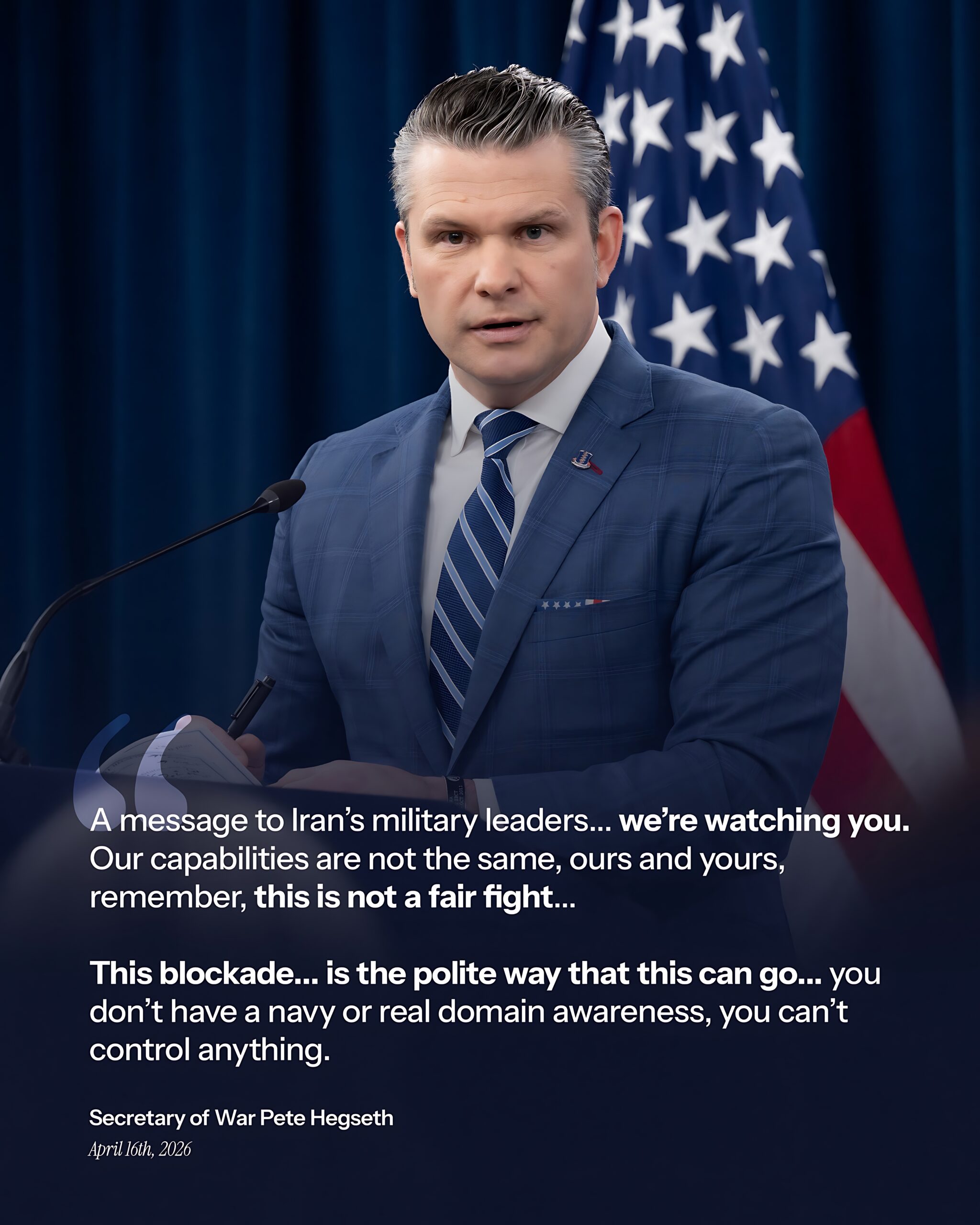
WASHINGTON — The United States issued one of its strongest warnings yet to Iran’s military leadership on Friday, declaring that the ongoing U.S. operation in the region will continue strictly “on American terms” and emphasizing that the two countries’ military capabilities “are not the same.”
The message, delivered by senior defense officials and echoed by President Donald Trump, comes as U.S. forces expand targeted operations across the Gulf following weeks of escalating tensions.
“To Iran’s military leaders: our capabilities, ours and yours, are not the same,” a senior Pentagon official said. “This military operation is dictated by our terms.”
The statement marks a sharp escalation in rhetoric at a moment when both nations are maneuvering for leverage amid rising regional instability.
Operation Continues Under Tight U.S. Control
Defense officials said the current operation — which includes naval, air, and cyber components — is designed to limit Iran’s ability to project force beyond its borders. While the Pentagon has not disclosed operational details, officials described the mission as “precise, sustained, and fully under U.S. command authority.”
Key elements of the operation include:
- Expanded naval patrols in the Strait of Hormuz
- Increased surveillance flights over Iranian military sites
- Cyber operations targeting command‑and‑control networks
- Reinforced U.S. bases in the Gulf region
Officials stressed that the U.S. is not seeking a full‑scale war but will respond “decisively” to any Iranian escalation.
Iran Condemns U.S. Messaging
Iran’s military leadership dismissed the U.S. warning as “psychological warfare,” accusing Washington of attempting to intimidate the country into concessions. Tehran maintains that its military posture is defensive and that U.S. actions in the Gulf violate international norms.
Iranian state media said the country’s armed forces remain “fully prepared” for any scenario.
Allies Urge Restraint as Tensions Rise
European and Gulf allies have expressed concern that the increasingly confrontational tone could trigger miscalculation. Several governments have urged both sides to maintain communication channels and avoid steps that could widen the conflict.
Diplomats say the U.S. message is intended to deter Iran from retaliatory strikes, but warn that Tehran may interpret it as a provocation.
Analysts: A Clear Attempt at Deterrence
Military analysts say the U.S. statement reflects a strategy aimed at reinforcing deterrence by highlighting the imbalance in capabilities.
“This is classic signaling,” said one former U.S. defense official. “Washington wants Iran to understand that escalation will not end in its favor.”
Others caution that public warnings can harden positions on both sides, making diplomacy more difficult.
What Comes Next
The White House has not indicated how long the current operation will continue, but officials say the mission will remain active “as long as threats persist.”
For now, the U.S. message to Iran is unmistakable: the pace, scope, and terms of the conflict will be set in Washington — not Tehran.